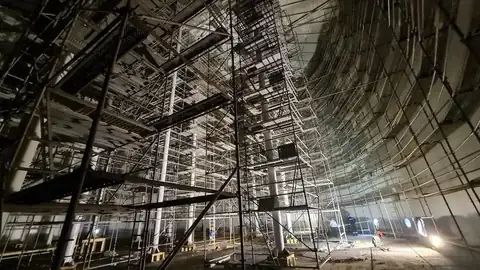
An energy site runs under stricter rules than an ordinary construction area. Thermal plants, combined-cycle gas, geothermal, hydroelectric and refineries share one fact. Working at height, hot surfaces, pressurised lines, rotating equipment and a narrow shutdown window exist at the same time. On this site scaffolding is not ancillary equipment; it is the temporary structure that makes maintenance possible.
If scaffolding is late on a boiler overhaul, tube replacement, refractory, NDT and insulation all jam together. On stack work, if there is no wind calculation, the platform sways. On a refinery unit, if an escape route is blocked, even the best material is not accepted. In energy, scaffolding quality is measured by the thickness of discipline before the thickness of the steel.
Site safety is built in three layers: the right system, permitted erection, continuous inspection. These three layers are the backbone of energy work. The missing layer devalues the other two as well.
On which units does scaffolding speak in an energy facility?
On boilers and heat-recovery units, typical jobs are circumferential ring scaffolds, burner levels, superheater zones and around ash hoppers. On stack and chimney work, tall towers, wind and anchors come to the front. In the turbine hall, platforms are generally lower but sensitive; distance to oil lines and rotating equipment is critical.
In refineries and petrochemicals, columns, reactors, furnaces, pipe racks and tank farms must be thought through separately. Under a pipe rack means height, traffic and cable trays. On tank farms, round geometry, stair towers and fire-water lines stress scaffold legs.
On geothermal sites, steam lines, separators and cooling towers; on hydroelectric plants, spillways, penstocks and turbine covers need different access. “Energy scaffolding” is not a single product name; it is a family of solutions that change shape by unit.
Why is facade scaffolding not enough?
For painting an administration building, H-frame safety facade scaffolding is correct. Forcing the same system onto a boiler jacket both inflates quantities and misses the geometry. Energy units are cylindrical, inclined, cantilevered and pierced. Ringlock adapts to that form. With members from the rosette, rings, cantilevers and internal platforms can be produced.
The load is different too. Refractory pallets, pipe sections, hoist legs on the scaffold and crowded shifts sit above facade paint loads. On energy scaffolding, work must not start without a written load plate and floor limit. The sentence “we’ll put a bit more on” is not acceptable on this site.
Shutdown plan: where does scaffolding sit in the programme?
In a good shutdown plan, scaffolding is at the start of the critical path. Because welding, insulation and inspection crews cannot enter the unit without it. Even so, on many projects scaffolding falls into the “we’ll look when the material arrives” line. The result is known: the first two days are only the tower rising, the real work starts after day three, the shutdown stretches.
The correct scenario is this. Weeks before the shutdown, a survey and laser/photo-supported layout are done. Material enters the site in stages. External towers operations allow are raised in advance. On shutdown day the inner rings, platforms and guardrails are completed. Dismantling is not piled up at the end of the shutdown either; it comes down in safe stages as the unit returns to production.
Night shifts are common in energy. Lighting, wind, shift handover and fatigue grow accidents. Temporary cables on the scaffold, open platform edges and unmarked voids are more dangerous at night. That is why the discipline built by day must be handed over in writing for the night.
ATEX, hot work and permit culture
In refineries and some energy units, explosive atmospheres are real. The scaffolding crew must be part of this culture, not a guest. Work-permit forms, gas monitoring, hot-work watch, spark covers and fire extinguishers cannot be left outside as “not the scaffolder’s job”. The underside of the platform is the plant’s artery.
A scaffold leg must not block a hydrant, emergency shower, escape stair or gas-detection panel. That is a red line in the survey. Starting erection before the layout is drawn, then saying “we’ll shift it”, loses both time and reputation on an energy site.
Earthing, metal scaffolding and electrical lines sit under the same heading. Nearby cable trays, open busbars and welding leads can form an unintended circuit with the scaffold. The site electrician and the scaffolding supervisor must see the same plan.
Working at height and wind
On stacks, chimneys and tall boiler towers, wind is not a theoretical heading. Mesh and sheeting increase the wind area. If anchors are sparse, the tower fatigues. If the material-lowering rope on upper floors is uncontrolled, the area below has to close. On an energy site the assumption “nobody underneath” is dangerous, because underneath there is always a line, a valve, a walkway.
Personal protective equipment does not replace scaffolding. A safety harness is also used on a platform with guardrails, but it does not legitimise a platform without them. Double guardrails, toe boards, stair towers and gated access are the minimum language of energy scaffolding.
Weather stop criteria must be written in advance. Above a given wind speed, upper-floor erection stops. This is the first rule sacrificed under “just finish the job” pressure. Yet losing one shutdown day is cheaper than one serious accident.
Engineering and material certificates
Energy investors and operators ask for documents. That is not a bureaucratic whim; it is the language of accidents and insurance. The TS EN 12810 / 12811 framework, material certificates, structural calculations, erection plan, risk assessment and periodic inspection records must sit in the file.
Calculations are indispensable especially on hanging cantilevers, tall free-standing towers and ring scaffolds. Inward lean around a boiler, wind around a stack, openings under a pipe rack are not solved by intuition. 3B İskele does not hide engineering behind the quote on this work. Because on an energy site the sentence “we’ll calculate later” means never having started the job.
Material traceability also matters. Mixed stock, bent frames, cracked wedges and undocumented welded specials are rejected in the middle of a shutdown. Rejected material is a lost day.
Logistics: the real bottleneck of a plant site
A plant site is large, but the gate is narrow. Material vehicles pass weighbridge, security and the permit list. In shutdown week the classic picture is a queue at the gate, a truck that cannot get in, and a pallet lost on site. That is why delivery windows must lock to plant logistics, material must be labelled by unit, and the stock area must not break the forklift loop.
Spare-part allowance is more critical in energy than in construction. When one rosette, one diagonal, one stair member is missing, that floor cannot be worked. “We’ll send it tomorrow” is an answer that has no tomorrow in a shutdown. Holding buffer stock on site is not waste; it is insurance.
Common mistakes
Opening the shutdown by erecting scaffolding. Ignoring wind on stack work. Putting legs on an oily turbine-hall floor without sole plates. Blocking the escape route under a pipe rack. Leaving dismantling to the most exhausted shift. Not putting the subcontractor scaffolding crew into the permit system.
The cost of these mistakes is not only accidents. Operations remember that supplier at the next tender. Energy work is reference work. Loss of trust at one plant also affects other shutdowns in the region.
A calm measure for the decision-maker
On energy scaffolding, cheapness is the first line that stretches the shutdown. The real question is this: who fits this unit geometry, who enters the permit culture, whose crew goes out at night, whose signature is on the calculation?
Collect the answer in three words: system, permit, tempo. 3B İskele holds these three words in the same site language. Ringlock industrial systems, documented erection crews and logistics designed for the shutdown are exactly what the energy manager is looking for. When you say “we need scaffolding”, you have actually said “this boiler, this week, open it without an accident”.
Stock and site experience on the İzmir–İstanbul corridor know that plant and refinery work has no patience for waiting. Safe scaffolding is the unseen insurance of energy production.
Conclusion
Power-plant and refinery scaffolding is not a scaled-up version of facade work. Unit geometry, ATEX and permit culture, wind, shutdown calendar and engineering must be read together. Ringlock systems are the backbone of these sites. H-frame facade systems sit separately on administration buildings.
Before the next shutdown, bring the survey forward, write scaffolding on the critical path, and ask for documents and spare material. A tower planned with 3B İskele becomes the calmest sentence in maintenance: work has started, the platform is ready, the unit will return on time.